
Introduction: A Genius the World Chose to Forget
On January 7, 1943, Nikola Tesla died alone in Room 3327 of the New Yorker Hotel, penniless, largely forgotten, and surrounded by unpaid bills. The man who had, half a century earlier, been hailed as the greatest electrical mind in America ended his life in near-total obscurity. No state funeral. No national mourning. Just a hotel maid finding the body of an 86-year-old inventor who had once held the future of human civilization in his hands.
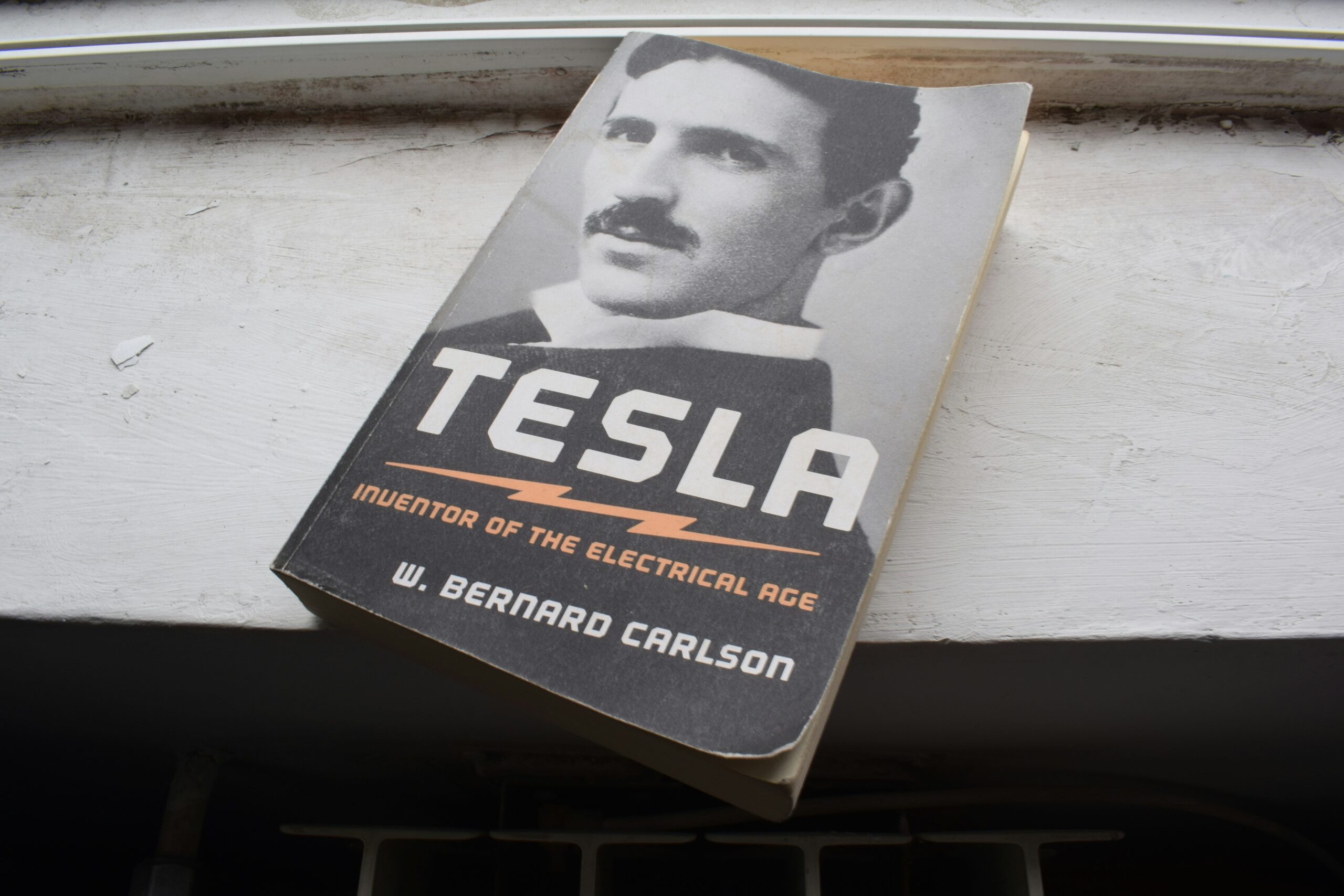
Tesla was born on July 10, 1856, in Smiljan, in what is now Croatia, the son of an Orthodox priest. He arrived in the United States in 1884 with almost nothing, four cents in his pocket, a letter of recommendation, and a mind that one of his first employers, Thomas Edison, would call impressive but impractical. That dismissal would define the rest of his life: a story not merely of scientific genius, but of genius crushed under the weight of money, competition, and the ruthless logic of industrial capitalism.
This is the suppressed history of Nikola Tesla, the man who built the electrical world we live in, and who died without receiving credit, compensation, or legacy from it.
The War of Currents: The Battle Tesla Won and Lost
Tesla’s first great conflict was the War of Currents, the late-nineteenth-century battle between two fundamentally different electrical systems that would determine how the entire world received its power.
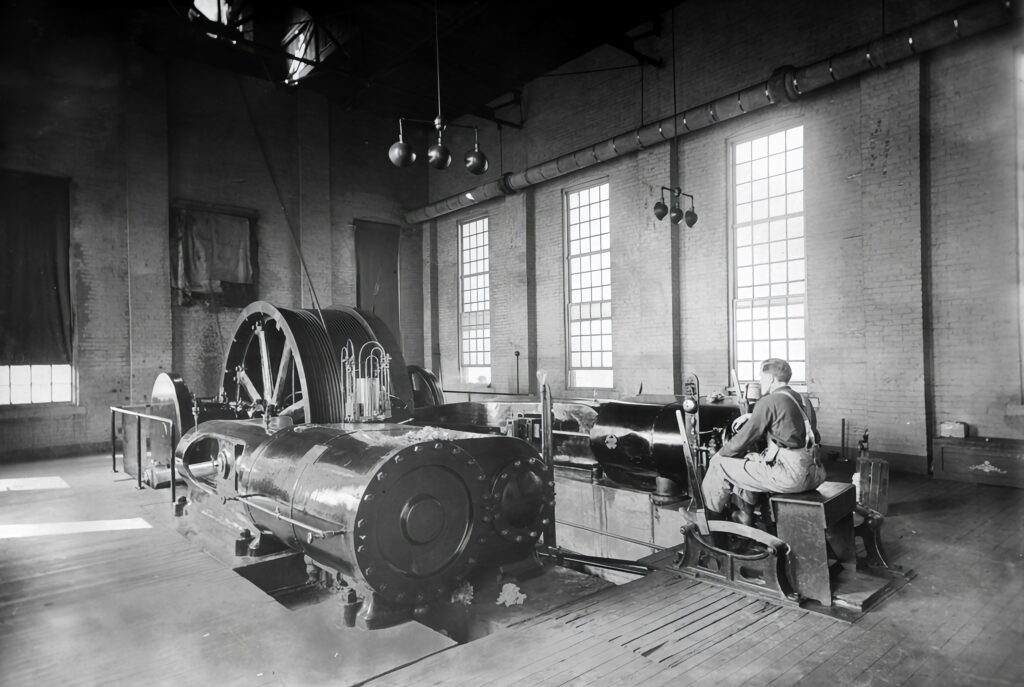
Thomas Edison championed direct current (DC). It was his system, built on his patents, powering his growing network of power plants in New York City. Tesla, after a bruising stint at Edison’s company where he was reportedly promised $50,000 to improve Edison’s DC generators, a promise Edison later dismissed as a joke, broke with Edison entirely and partnered with George Westinghouse.
Tesla’s system was alternating current (AC). Unlike DC, which could only travel short distances without significant power loss, AC could be transmitted over vast distances at high voltages and then stepped down for household use. It was demonstrably superior. In 1888, Westinghouse purchased Tesla’s AC patents for $60,000 in cash and stock, a figure equivalent to several million dollars today.
Edison’s response was extraordinary in its ruthlessness. He hired an electrical engineer named Harold Brown to conduct a public smear campaign against AC, staging demonstrations where stray dogs and cattle were electrocuted with alternating current to prove its danger. Edison secretly financed the development of the alternating current electric chair, designed not to execute criminals humanely, but to imprint the public association between Tesla’s AC and death in the public mind. The word Edison pushed to describe electrocution was “Westinghoused.”
It failed. The 1893 World’s Columbian Exposition in Chicago was lit entirely by Tesla’s AC system. The contract to harness the power of Niagara Falls, the largest electrical infrastructure project in American history to that point, went to Westinghouse using Tesla’s patents. The War of Currents ended in a decisive AC victory.
But Tesla’s personal victory was short-lived. Fearing that Westinghouse Electric would go bankrupt under the weight of litigation costs, Tesla made a decision of staggering financial self-sacrifice: he tore up his royalty contract, walking away from millions of dollars in royalties already owed and billions that would have accrued over the lifetime of AC power. His reward for this generosity was that the system he invented enriched everyone around him while leaving him progressively impoverished.
Wardenclyffe: The Dream That Was Destroyed
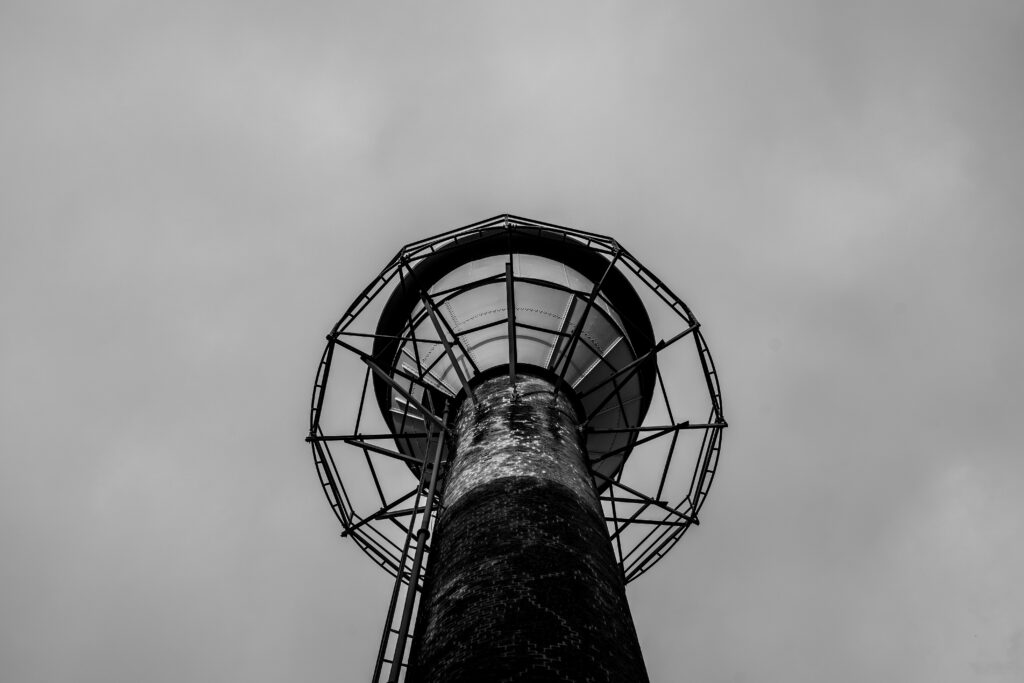
By 1900, Tesla was already widely regarded as America’s foremost electrical engineer. He turned his attention to what he believed would be his greatest achievement: the Wardenclyffe Tower project, a global wireless system for transmitting both information and electrical power without wires.
Tesla envisioned a 187-foot wooden tower on Long Island that would use the Earth itself as a conductor, transmitting electricity wirelessly to receivers anywhere on the planet. “When wireless is fully applied,” Tesla wrote, “the earth will be converted into a huge brain, capable of response in every one of its parts.” He dreamed of a world where electricity was universally accessible, not metered and sold, but transmitted freely, like sunlight.
In March 1901, financier J.P. Morgan invested $150,000, equivalent to over $5.8 million today, in exchange for a 51 percent share of any wireless patents Tesla generated. Construction began on the Wardenclyffe facility in Shoreham, New York, that same year.
The project almost immediately ran into financial trouble. Tesla had underestimated construction costs, and the materials required were more expensive than projected. When Tesla revealed to Morgan that his ambitions extended beyond wireless communication to wireless power transmission, something fundamentally difficult to monetize in the way radio could be, Morgan refused all further funding. “It will be impossible for me to do anything in the matter,” Morgan communicated through his secretary.
The timing was devastating. In December 1901, Guglielmo Marconi successfully transmitted the letter “S” in Morse code across the Atlantic from England to Newfoundland. Tesla immediately pointed out that Marconi had used 17 of his patents to do so. The U.S. Patent Office initially sided with Marconi. Investors flooded Marconi’s operation with capital. Wardenclyffe stood unfinished on Long Island as Tesla’s finances collapsed beneath him.
Tesla took out a mortgage on the Wardenclyffe property in 1904 and a second mortgage in 1908. By 1915, the site had fallen into foreclosure. In 1917, the 187-foot tower was demolished and sold for scrap to help pay Tesla’s debts. According to the Smithsonian Magazine, by this point it was already known as “Tesla’s million dollar folly.” The U.S. Supreme Court would not restore Tesla’s priority over Marconi in the invention of radio until 1943, the same year Tesla died.
The Papers: Seized and Classified
When Tesla died in January 1943, the Office of Alien Property, a wartime government agency, moved within hours to seize all of his papers, notes, and research materials. Tesla was, technically, a naturalized American citizen, which made the seizure legally questionable. The official justification was national security: the United States was at war, and Tesla had for years spoken publicly about a “teleforce” weapon he called a death beam,, a directed-energy device he claimed could neutralize enemy aircraft at ranges of up to 250 miles.
The papers were examined by MIT physicist John G. Trump, uncle of future U.S. president Donald Trump. Trump’s official assessment was that the papers contained nothing that posed a security risk and nothing that represented practical scientific advances beyond what was already known. Some papers were subsequently returned to Tesla’s family. Others remained classified for years. His entire estate was eventually shipped to Belgrade in 80 trunks marked “N.T.” and now resides at the Nikola Tesla Museum, where his archive of over 160,000 documents is listed in the UNESCO Memory of the World Programme.
What those papers contained in full, and what, if anything, was withheld, remains a matter of legitimate historical uncertainty. Tesla had filed approximately 300 patents worldwide during his lifetime. Several remain unaccounted for.
What Tesla Actually Invented: Separating Fact from Myth
The popular mythology around Tesla has grown to such proportions that separating historical fact from romanticized legend requires care. Tesla did not invent “free energy” in the sense of energy that violates thermodynamic laws. The scientific consensus is clear that no such device is possible. What Tesla did invent was a vision of wireless power transmission, energy broadcast through the atmosphere and received without wires, that was genuinely revolutionary for its era and whose technical challenges proved beyond the resources available to him.
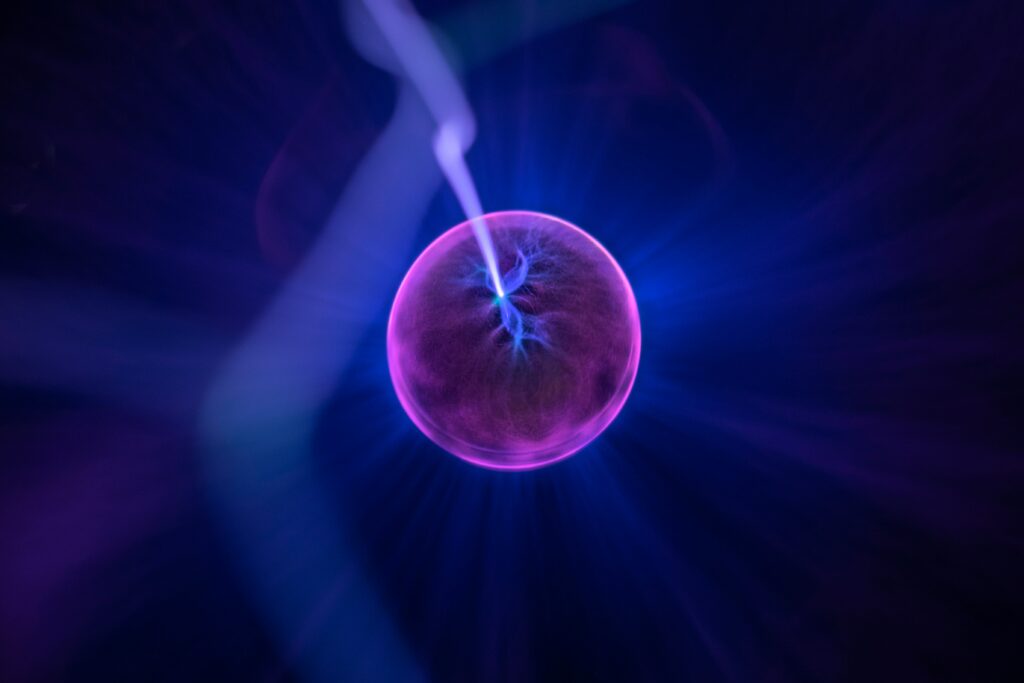
What he undeniably contributed to the modern world is staggering: the alternating current system that powers virtually every home and building on earth; the AC induction motor, which Mark Twain called “the most valuable patent since the telephone”; the Tesla coil, still used in radio technology; the rotating magnetic field; foundational work on X-ray technology; neon lighting; the remote-controlled boat, demonstrated publicly in 1898 and representing the world’s first radio-controlled vehicle; and critical early work on radar technology. The unit of magnetic flux density in the International System of Units, the tesla, was named in his honor in 1960.
Why History Buried Tesla
The suppression of Tesla’s legacy was not the work of a single shadowy conspiracy. It was the cumulative result of several interlocking forces that are thoroughly documented in historical record.
First, Edison’s sustained and deliberate campaign to discredit AC technology damaged Tesla’s public standing throughout the 1890s. Second, Tesla’s financial naivety, his willingness to tear up contracts, his inability to monetize his inventions, his failure to cultivate investors, left him repeatedly without resources at critical moments. Third, the Marconi decision by the U.S. Patent Office in 1904, later reversed but too late to matter commercially, stripped Tesla of credit and royalties for the invention of radio, channeling the wealth and fame of that discovery to his rival.
Fourth and most significantly, Tesla’s vision of universally accessible, wirelessly transmitted electricity was structurally incompatible with the emerging model of metered, commodified electrical power. The electrical infrastructure of the twentieth century was built on scarcity and billing, on the ability to charge for every unit of power consumed. A world of wireless, broadly accessible electrical power was not merely technically challenging. It was economically inconvenient for the very people with the capital to make it real.
Legacy: The Inventor the Future Finally Remembered
Tesla’s rehabilitation began slowly. In 1960, seventeen years after his death, the scientific community named the SI unit of magnetic flux density in his honor. In 2013, Time Magazine named him one of the 100 most significant figures in all of human history. The Wardenclyffe site was saved from demolition in 2013 by a grassroots campaign supported by The Oatmeal, a webcomic, and is now being developed as a science museum. In 2018, it was listed on the National Register of Historic Places.
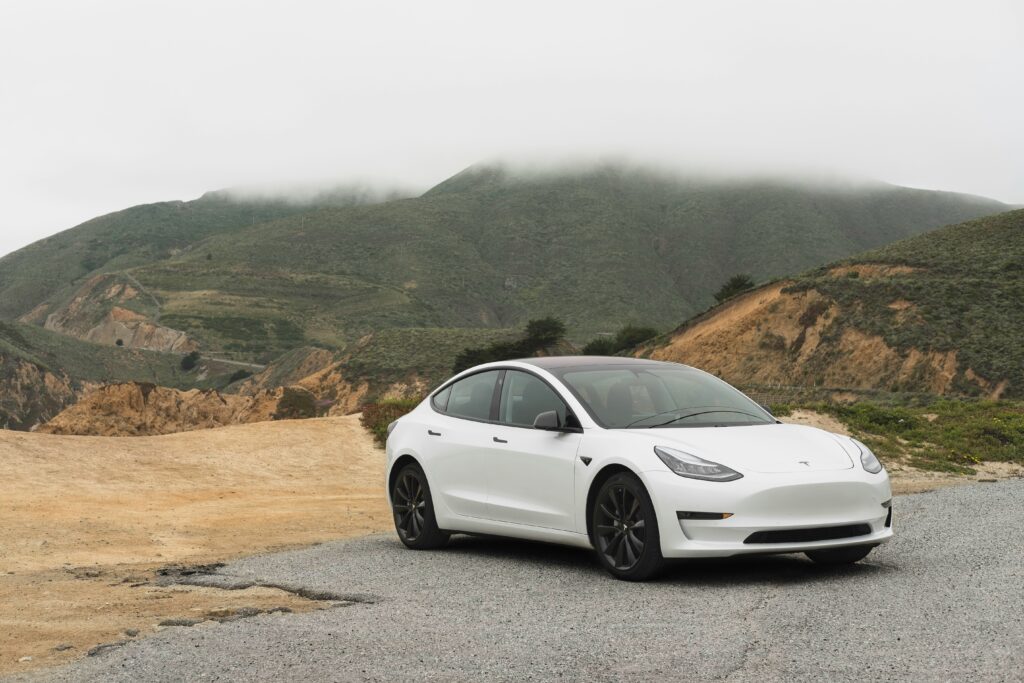
The company bearing his name, Tesla, Inc., founded by Elon Musk, is now one of the most valuable automotive companies in the world. Every electric vehicle it produces runs on a system whose fundamental principles Tesla pioneered. The global electrical grid, the radio, the induction motor, the foundations of X-ray and MRI technology, all carry Tesla’s fingerprints.
He died with nothing. The future he built belongs to everyone.
Conclusion: The Cost of Being Ahead of Your Time
Nikola Tesla’s story is not simply the story of a brilliant inventor betrayed by corporate greed. It is the story of what happens when a vision of abundance collides with a system built on scarcity. It is the story of what happens when a man of pure scientific imagination enters an arena where imagination without capital is powerless.
As Tesla himself wrote: “Perhaps it is better in this immature world of ours that a revolutionary idea instead of being helped and patted, be hampered and ill-treated by selfish interest, pedantry, stupidity and ignorance; that it be attacked and stifled; that it pass through bitter trials and tribulations, only to emerge all the more powerfully, all the more triumphantly from the struggle.”
He was right about the emergence. He just did not live to see it.