

Introduction: A Term That Divides
Few political concepts in recent history have generated as much controversy, confusion, and polarization as the “deep state.” To some, it is a dangerous conspiracy theory deployed by populist politicians to delegitimize democratic institutions. To others, it is a sober description of how unelected power actually operates behind the facade of elected government. The truth, as with most complex political phenomena, resists both extremes. Understanding the deep state requires moving beyond partisan rhetoric and examining it as what it fundamentally is. An academic and political concept with real historical roots, documented precedents, and genuinely contested implications for democratic governance.

Origins: From Turkey to the World
The term itself did not originate in Washington or Hollywood. The concept of the deep state originated in Turkey, where it was known as derin devlet, literally “deep state”. And was used to describe an alleged network of military, intelligence, and bureaucratic elements operating independently of elected officials to maintain a particular ideological or political status quo. Wikipedia
The modern Turkish interpretation gained traction when members of the authoritarian government were said to have conspired with organized crime to conduct violent attacks against the opposition Kurdish Workers Party in the 1990s, exposing a rumored secret alliance between the military, intelligence services, organized crime, and the business elite. History News Network Turkish Prime Minister Bülent Ecevit was the first state official to publicly acknowledge the deep state phenomenon in 1974, referring to the Kontrgerilla organization and its questionable activities, though the concept gained wider public attention following the 1996 Susurluk scandal, which exposed connections between government officials, military officers, and organized crime figures. UW-Madison Libraries
Critically, there is a documented link between Turkey’s deep state and the Operation Gladio network discussed in our previous blog. There is strong consensus that the Turkish deep state was heavily influenced by the creation of a secret NATO-led unit called Operation Gladio. A clandestine stay-behind force suspected of operating independently within the Turkish state to combat alleged communists in the event of war with the Soviet Union. SearchWorks
If you guys want to read about Operation Gladio in detail, like what was its purpose, how did it operate, how it came to notice despite a secret NATO weapon. Then do check out our Article “Operation Gladio: NATO’s Secret Army Hidden in Plain Sight“
From Turkey to America: The Concept Travels West
The term entered English-language academic discourse gradually. Peter Dale Scott, a professor emeritus at the University of California Berkeley, introduced the concept into English-language academic discourse through his 2007 book “The Road to 9/11“, describing how parallel forces operate alongside the regular “public state.” UW-Madison Libraries
The concept gained mainstream political traction through former Republican congressional aide Mike Lofgren. In 2014, Lofgren published an influential essay titled “Anatomy of the Deep State,” followed by his 2016 book “The Deep State: The Fall of the Constitution and the Rise of a Shadow Government“, in which he defined the American deep state as a nexus of corporations, banks, and defense contractors that had gained enormous financial and political control. He later expressed concern about how the term was being misused. UW-Madison Libraries
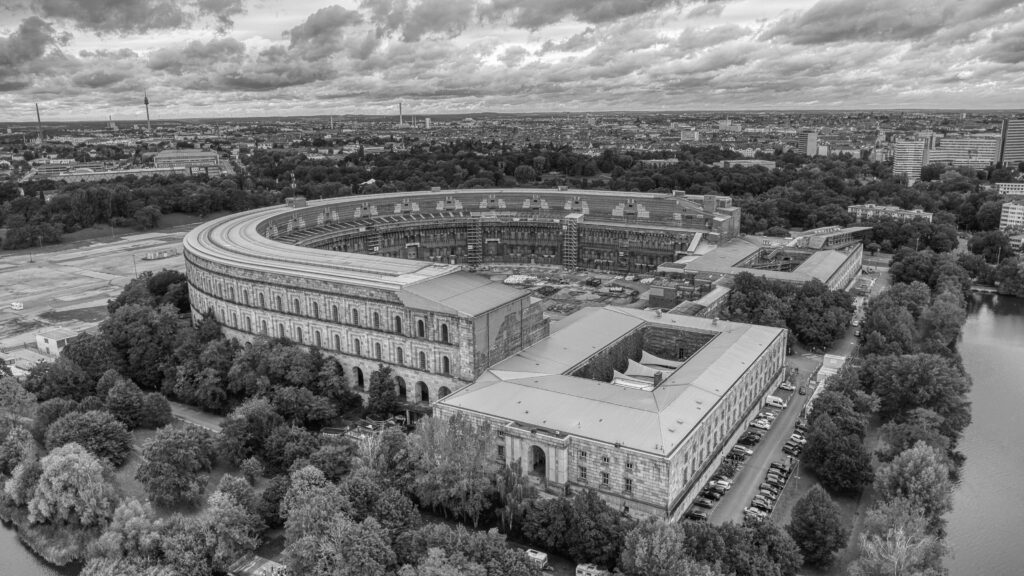
The deep state concept’s grip on the American political imagination partly resulted from excessive state secrecy and official deception. The intricate cynicism toward the federal government finds its origins in legitimate public concern about Cold War CIA covert operations. History News Network
What Academia Actually Says
Academic scholarship on the deep state reveals something important: the concept is real in some contexts, exaggerated in others, and fundamentally misused in most political discourse. Research utilizing bibliometric metadata from 64 articles published between 2009 and 2024 found that discussions on the deep state are fragmented across disciplines such as political science, public administration, law, international relations, and history. Also intersecting with themes like democratization, civilian-military relations, and informal networks. Yet the concept has not formed into a standalone idea. Interpretations differ regionally and temporally. Routledge
Scholarly opinion on the American case is sharply divided. Political scientist George Friedman argues that the so-called deep state is no secret. The civil service was created by law to limit the power of the president. Historian Alfred W. McCoy has argued that the expansion of the intelligence community since September 11 has built a fourth branch of government that is increasingly autonomous from the executive. Tufts University professor Michael Glennon points to President Obama‘s failure to close Guantanamo Bay as evidence of a deep state constraining presidential power. Harvard professor Stephen Walt, by contrast, argues there is no deep state and that to the extent a bipartisan foreign-policy elite exists, it is hiding in plain sight. ResearchGate
The concepts of the deep state and the military-industrial complex have much in common. Both have been used academically to describe a phenomenon of political economy and power, and both have been used by activists as shorthand for the abuse of power and the divergence of governments away from serving the interests of the people. Dukereportbooks
Where It Is Real: Documented Cases
It is intellectually dishonest to dismiss the deep state concept entirely. Confirmed deep states have existed in several nations with authoritarian governments, including Turkey and Egypt. In some circumstances, these deep states aligned to resist the powers of an authoritarian ruler, sometimes deposing the government and openly claiming power. History News Network
Historical deep state activities are partially documented through parliamentary investigations and academic research, though much remains classified. Historically, such networks have used false flag terrorism, electoral manipulation, and paramilitary operations coordinated internationally, relying on policy influence, media management, and legal mechanisms rather than always resorting to direct violence. UW-Madison Libraries

The Danger of Weaponizing the Term
Here lies the central problem. A concept with genuine academic and historical validity has been weaponized for political purposes in ways that distort its meaning and damage democratic discourse. Recent concern about the deep state has strayed from the original meaning of the phrase. The idea of powerful subversive operatives hidden from public view has included bold charges and shadowy associations expressed in many variations. Amazon
Just as the term “military-industrial complex” came to take on a deeply pejorative and caricaturized form, the same is true for the deep state. It is a term that, largely due to the efforts of activists in the United States and Turkey, has come to mean more than the sum of its definitional components. Dukereportbooks
Conclusion: Neither Myth Nor Monolith
The deep state is neither a paranoid fantasy nor a monolithic secret government pulling every lever of power. It is something more nuanced and more troubling: a structural tendency within modern states for unelected institutions. Intelligence agencies, military establishments, permanent bureaucracies, financial networks to accumulate influence that outlasts elected governments and resists democratic accountability.
Where it becomes myth is in the leap from this structural reality to an all-powerful, centrally coordinated conspiracy. Where it is most dangerous is when politicians invoke it not to reform unaccountable institutions, but to delegitimize the very institutions that constrain their own power. The deep state, in the end, may be less a hidden government and more a mirror, reflecting back the tension at the heart of every modern democracy between the permanence of institutions and the impermanence of elected leadership.