

Introduction: The World Turned Upside Down
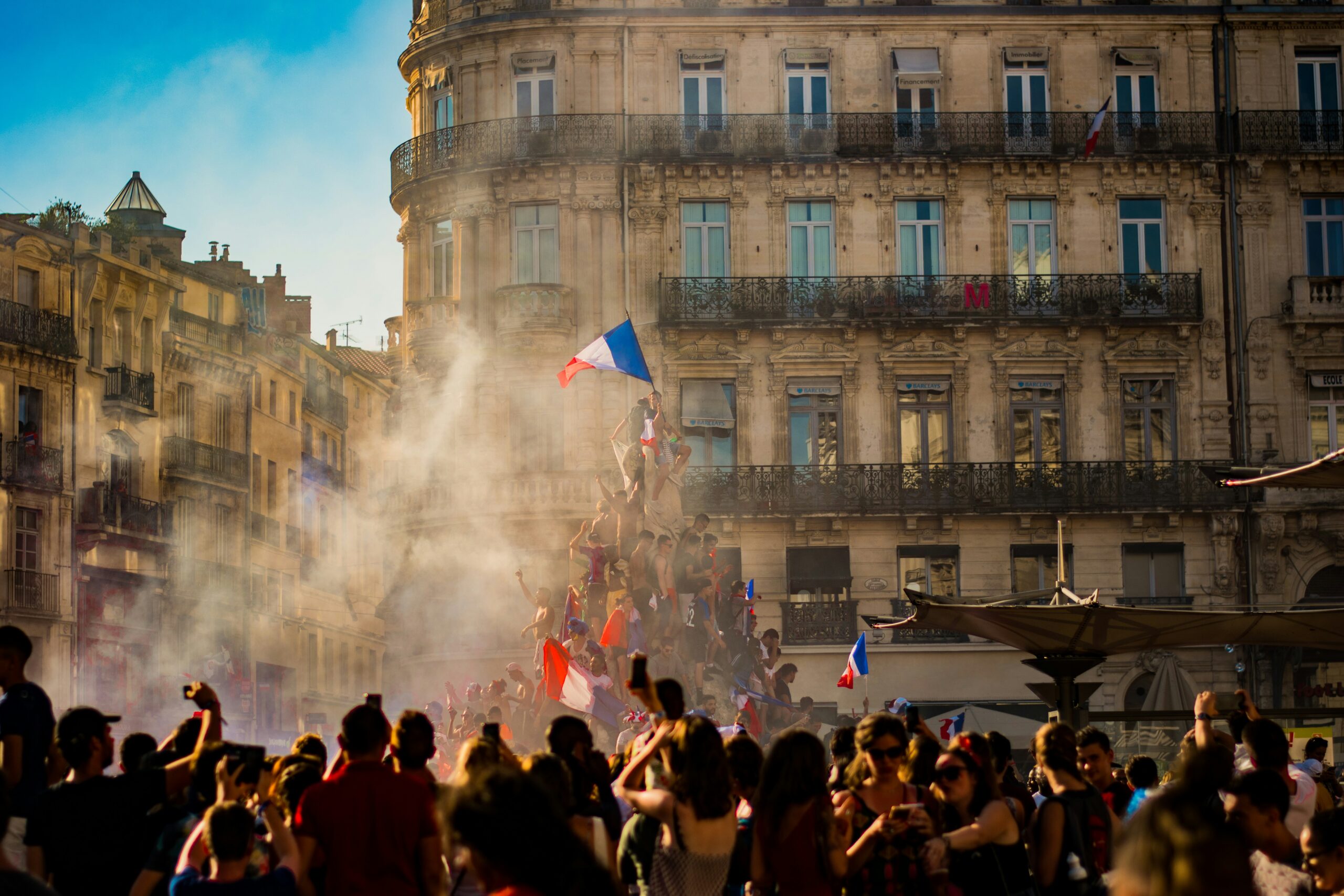
On July 14, 1789, a crowd of Parisian workers, artisans, and soldiers stormed a medieval fortress on the eastern edge of the city. The Bastille held only seven prisoners at the time of its fall. But its symbolic weight was incalculable, it represented everything the people of France had endured under centuries of royal absolutism, aristocratic privilege, and institutionalized inequality. The French Revolution was a watershed event in world history that began in 1789 and ended in the late 1790s with the ascent of Napoleon Bonaparte. During this period, French citizens radically altered their political landscape, uprooting centuries-old institutions such as the monarchy and the feudal system. Though it degenerated into a bloodbath during the Reign of Terror, the French Revolution helped to shape modern democracies by showing the power inherent in the will of the people.
It began with a cry for liberty. It ended with a guillotine, an emperor, and a redrawn political map of the entire Western world. Understanding the French Revolution means understanding not just what happened in France between 1789 and 1799, but why those ten years remain the most consequential decade in the history of modern politics.

The Causes: A Kingdom Eating Itself Alive
The French Revolution did not erupt from nowhere. It was the product of decades of structural failure, financial, social, agricultural, and political, converging into a single catastrophic moment of collapse.
Throughout the 18th century, France faced a mounting economic crisis. A rapidly growing population had outpaced the food supply. A severe winter in 1788 resulted in famine and widespread starvation in the countryside. Between 1715 and 1789, the French population grew from 21 to 28 million, 20% of whom lived in towns or cities, Paris alone having over 600,000 inhabitants. A nation of growing, hungry, increasingly urbanized people was being governed by institutions designed for a smaller, more manageable, more deferential society.
The fiscal catastrophe was equally devastating. By the late 18th century, France faced a dire financial crisis due to its involvement in costly wars, including the American Revolutionary War, and extravagant spending by the monarchy. France had spent itself into near-bankruptcy supporting the American Revolution against Britain, a decision that was geopolitically logical but financially ruinous. The interest on the national debt consumed over half of government revenues by 1788.
The social architecture of France made reform structurally impossible. Society was divided into three Estates, the clergy, the nobility, and everyone else. The social structure, divided into three estates with the clergy and nobility enjoying significant privileges, created widespread discontent. Enlightenment ideas also influenced public opinion, advocating for greater rights and equality.
The political failure of Louis XVI sealed France’s fate. King Louis XVI’s inept leadership significantly contributed to the outbreak of revolution. Faced with the country’s growing financial woes, he called the Estates-General in 1789, a legislative body that had not been convened for over 170 years. This was seen as a last-ditch attempt to resolve the fiscal crisis by negotiating tax reforms. However, instead of resolving the issues, the Estates-General exposed the deep divisions within French society. The Third Estate, frustrated by its lack of representation, broke away and formed the National Assembly, marking the beginning of a power struggle between the monarchy and the people.
The Storming of the Bastille: Revolution Ignites
The dismissal of the popular finance minister Jacques Necker on July 11, 1789 proved to be the spark. Parisians correctly read the dismissal as a signal that the counterrevolution was about to begin. Instead of yielding, however, they rose in rebellion. Street-corner orators stirred their compatriots to resist. Confronting royal troops in the streets, they won some soldiers to their side and induced officers to confine other potentially unreliable units to their barracks.
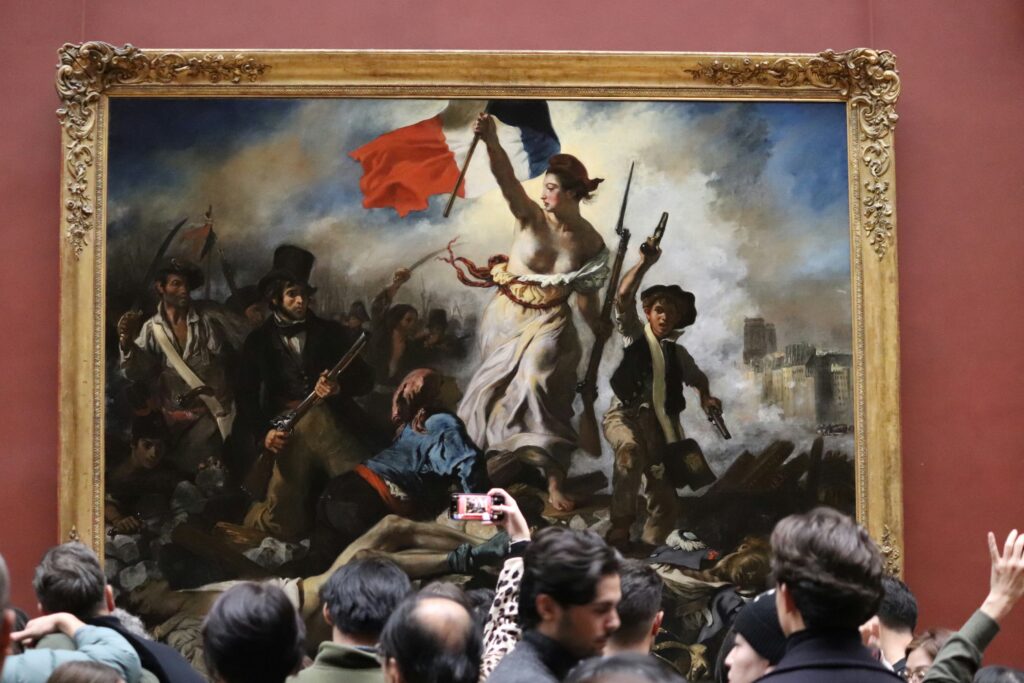
Three days later, the Bastille fell. Within weeks, the National Assembly passed one of the most significant legislative acts in human history. In August 1789, the National Assembly passed decrees abolishing feudal privileges. This historic move ended centuries of aristocratic dominance and paved the way for a more equitable society. Shortly after, the Declaration of the Rights of Man and of the Citizen was adopted, emphasizing the principles of liberty, equality, and fraternity.
The Declaration was not merely a French document, it was a philosophical statement for all humanity. It asserted that sovereignty resided in the nation, not the monarch; that rights were universal and natural, not granted by kings; and that the purpose of government was to protect the liberty of its citizens, not to extract taxes for its own enrichment. Thomas Jefferson, who had drafted the American Declaration of Independence just thirteen years earlier, was present in Paris as the American minister to France and watched the Revolution unfold with a combination of admiration and growing alarm.
The Execution of the King: No Going Back
By 1792, the monarchy was finished. The royal family’s failed attempt to flee France, captured at Varennes and returned to Paris in humiliation, destroyed whatever remained of Louis XVI’s legitimacy. War had broken out with Austria and Prussia, whose rulers viewed the Revolution as an existential threat to every throne in Europe.
On January 21, 1793, Louis XVI was guillotined in the Place de la Révolution before a crowd of Parisian citizens. His wife, Marie Antoinette, whose lavish spending had made her a symbol of royal excess, followed him to the scaffold on October 16, 1793. The execution of a reigning monarch was unprecedented in European history. It announced to the courts of Europe that the old rules no longer applied, and it terrified them.
The Revolution had crossed a threshold from which there was no return. In killing their king, the French people had not merely removed a ruler. They had abolished the entire cosmological framework that had justified monarchy for a thousand years, the divine right, the sacred anointing, the God-given hierarchy of king above subject. What replaced it would be written in blood.
The Reign of Terror: When Liberty Ate Its Own Children
The most violent and ideologically disturbing phase of the French Revolution began in September 1793 and lasted until July 1794. It is known to history as the Reign of Terror, and it remains one of the most instructive case studies in how revolutionary idealism curdles into authoritarian violence.
The Reign of Terror was a climactic period of state-sanctioned violence during the French Revolution, which saw the public executions and mass killings of thousands of counter-revolutionary suspects between September 1793 and July 1794. The Terror was organized by the twelve-man Committee of Public Safety, which exercised almost dictatorial control over France. The Terror was the culmination of years of fear and paranoia that had long existed as undercurrents to the Revolution.
In September 1792, as foreign armies threatened Paris and rumors of royalist conspiracies spread, mobs launched a wave of mass killings, targeting perceived enemies of the revolution. Thousands of prisoners, including nobles, clergy, and suspected counter-revolutionaries, were brutally murdered in a frenzy of violence. In response to the escalating crisis, the National Convention established the Committee of Public Safety in April 1793, granting it broad powers to defend the revolution and suppress internal dissent. Led by figures such as Robespierre and Georges Danton, the Committee wielded near-dictatorial authority.
The numbers are staggering. Between the summers of 1793 and 1794, more than 50,000 people were killed for suspected counter-revolutionary activity or so-called crimes against liberty. One-third of this number died under the falling blade of the guillotine. The victims were not only aristocrats and priests, they included Girondins, moderate republicans, Jacobin rivals, and eventually the architects of the Terror themselves.
Maximilien Robespierre, the lawyer from Arras who had once been called the Incorruptible for his austere personal virtue and unwavering commitment to revolutionary principles, became the Terror’s most potent symbol. Many of the killings were carried out under orders from Robespierre, who dominated the draconian Committee of Public Safety until his own execution on July 28, 1794. Over 17,000 people were officially tried and executed during the Reign of Terror, and an unknown number of others died in prison or without trial.
The logic of the Terror was self-destroying. Every execution generated new enemies. Every accusation widened the circle of suspicion. When the Terror finally consumed Robespierre himself, arrested and guillotined on the very instrument he had used to destroy thousands, the Thermidorian Reaction that followed represented not a triumph of moderation but a collective recognition that the machine had gone out of control.
Napoleon: The Revolution’s Final Contradiction
The chaos that followed the Terror produced five years of unstable directory government before producing the Revolution’s most consequential and paradoxical figure. The French Revolution officially ended in 1799 with the rise of Napoleon Bonaparte. A brilliant military commander, Napoleon capitalized on the political instability of post-revolutionary France. In a coup d’état, he seized power and established the Consulate, effectively ending the revolutionary period. While Napoleon would go on to become Emperor of France, his reign spread many revolutionary ideals, such as legal equality and meritocracy, across Europe through his Napoleonic Code.
France had abolished its monarchy only to find itself under the rule of an emperor. John Adams had feared just such a chaotic end, a revolution of this sort, he had argued, would lead not to democracy but despotism. Adams was both right and wrong. Napoleon was a new kind of ruler, one who derived his legitimacy not from divine right but from popular sovereignty and military genius. He was, in his own way, a product of the Revolution even as he buried it.
The Napoleonic Code, promulgated in 1804, codified the Revolution’s core civil achievements: equality before the law, property rights, secular governance, the abolition of feudal privilege. It became the legal foundation for legal systems across Europe, Latin America, and beyond. In spreading these principles through conquest, Napoleon inadvertently exported the revolutionary ideas his empire was simultaneously suppressing in France.
Legacy: The Politics We Inherited
The French Revolution’s ideals transcended national borders. It inspired revolutionary movements across Europe and Latin America and contributed to the abolition of feudal systems worldwide. Concepts like universal suffrage, secular governance, and the separation of church and state found their roots in this transformative period.
The Revolution bequeathed to modern politics its most fundamental organizing categories. The terms left and right in political discourse originate directly from the seating arrangements in the French National Assembly of 1789, where those who sat to the left of the president supported revolutionary change and those on the right defended royal authority. Every political debate in the modern world still takes place within this framework, using vocabulary born in that single chamber.
The Revolution also established the most disturbing pattern in modern political history: the tendency of revolutionary movements to reproduce the structures of power they sought to destroy. The Committee of Public Safety was as authoritarian as any monarch. The Terror killed more French citizens than the Ancien Régime it replaced. Napoleon restored the hierarchy, the centralization, and ultimately the imperial title of the system the Revolution had dismantled. The cycle of liberation, radicalization, terror, and authoritarian restoration has repeated itself in the Russian Revolution of 1917, the Chinese Revolution of 1949, the Iranian Revolution of 1979, and beyond.
Conclusion: The Revolution That Never Ended
The French Revolution did not end in 1799. Its ideas, popular sovereignty, natural rights, secular governance, the legitimacy of resistance against tyranny, entered the permanent vocabulary of human political aspiration. Every democratic constitution written since 1789 draws from its well. Every revolutionary movement that has sought to overturn an unjust order has invoked its language.
But the Revolution also left a darker inheritance: the demonstration that the desire for liberty, unmoored from institutional constraint and procedural protection, can transform with terrifying speed into the appetite for absolute power. Liberty, massacre, and the birth of modern politics, all three were present in France between 1789 and 1799, inseparable from each other, products of the same historical moment.
The guillotine was not the betrayal of the Revolution. It was its most honest self-portrait.