
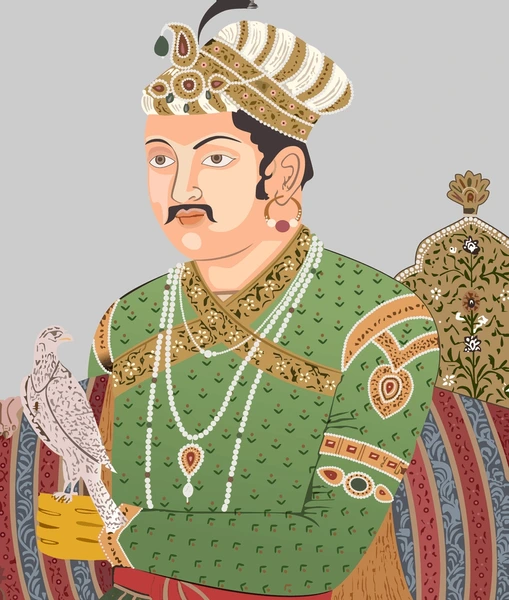

Introduction: A Ruler Ahead of His Century
In the sixteenth century, an era defined by the Spanish Inquisition, the Wars of Religion in Europe, and brutal sectarian conflict across the Islamic world, one ruler chose a radically different path. Akbar the Great, the third emperor of the Mughal dynasty, built a multi-religious empire of over 100 million people on the foundational principle that the state had no business dictating the faith of its subjects. Akbar was Muslim but took an active interest in the various religions of his realm, including Hinduism, Zoroastrianism, and Christianity, in his efforts to consolidate the diverse empire and to promulgate religious tolerance. He sidelined the typically powerful ulama and formulated an eclectic state-sponsored religious movement known as Din-i Ilahi.
His story is not merely one of conquest and administration. It is one of the most ambitious experiments in pluralistic governance in the pre-modern world, and one whose lessons remain urgently relevant today.
Origins: An Emperor Forged by Adversity
Formally named Abul Fath Jalal-ud-din Akbar, he was born in 1542 in Umerkot, in what is now Pakistan’s Sindh province. He is remembered for his rejection of religious intolerance and the measures he took to ensure the security of non-Muslims under his reign. Akbar was the grandson of the founder of the Mughal Empire, Babur, a Timurid prince who conquered large swathes of the Indian subcontinent in the early 16th century.
His early life was anything but secure. Akbar succeeded his father Humayun when he was 13, although not easily. Humayun had barely established his authority after regaining his throne the year before he died. Akbar’s accession could not be assured for some time after his father’s death, but his authority was eventually consolidated under the guidance of his chief minister Bayram Khan.
The intellectual formation of Akbar, who was never formally taught to read or write yet possessed one of the most curious and wide-ranging minds of his era, was shaped from the beginning by exposure to diverse traditions. In his childhood, Akbar had come into contact with Islam and Sufism. He was educated by scholars who were followers of the Shia tradition. His childhood tutors, who included two Iranian Shias, made an important contribution to Akbar’s later inclination towards religious tolerance. The seeds of his later pluralism were sown in those early years.
The Military Foundation: Conquest Before Tolerance
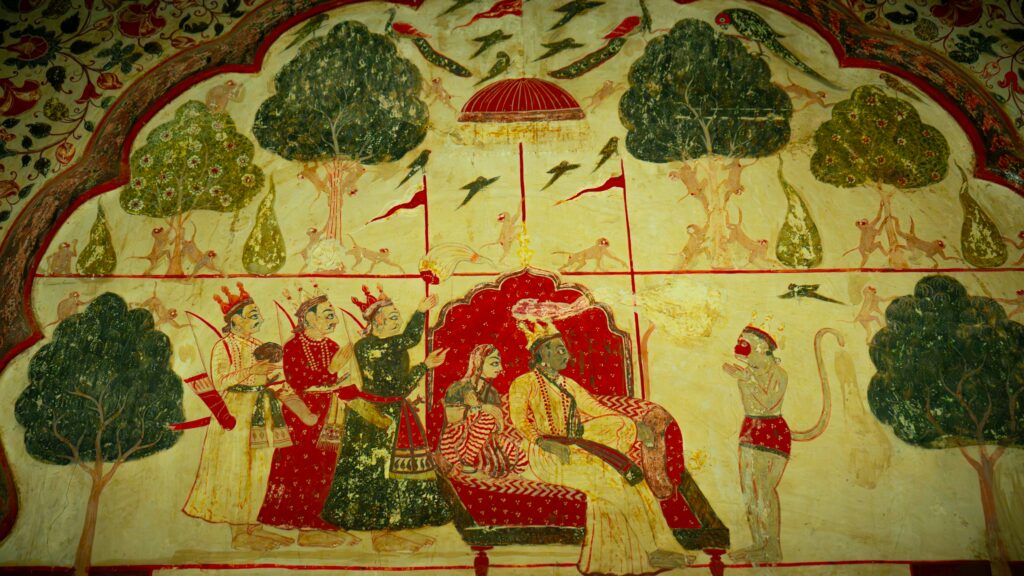
It would be historically dishonest to present Akbar purely as a philosopher-king. He was, first and foremost, a conqueror of formidable capability who understood that tolerance required power as its foundation. Akbar’s success stemmed from his religious policy based on Sulh-i Kul, universal peace and harmony between all his subjects regardless of their social, ethical, or religious identities. In fact, he was the real founder of the empire after his victory at the Second Battle of Panipat in 1556.
When, after protracted fighting in Mewar, Akbar captured the historic fortress of Chitor in 1568, he massacred its inhabitants. Even though Mewar did not submit, the fall of Chitor prompted other Rajput rajas to accept Akbar as emperor in 1570 and to conclude marriage alliances with him. This willingness to combine military force with diplomatic accommodation was the hallmark of Akbar’s imperial strategy. Once submission was secured, the policy of inclusion began immediately.
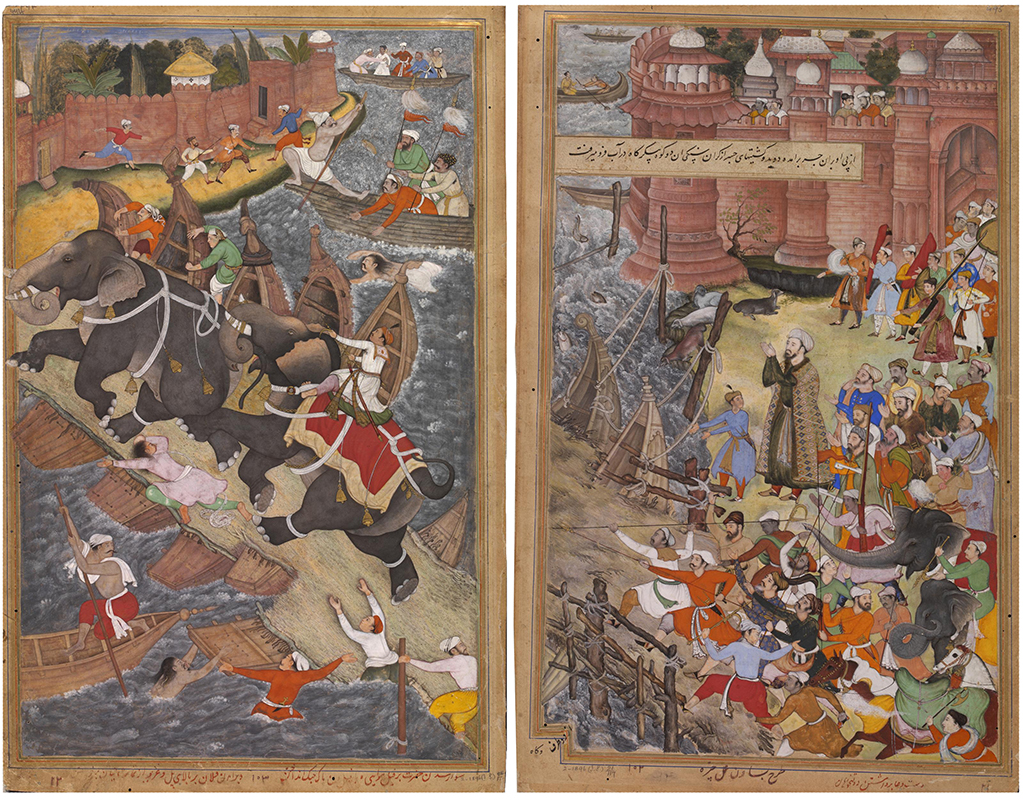
Toward the end of his reign, Akbar embarked on a fresh round of conquests. The Kashmir region was subjugated in 1586, Sindh in 1591, and Kandahar in 1595. Mughal troops then moved south into the Deccan. By 1601, Khandesh, Berar, and part of Ahmadnagar had been added to Akbar’s empire. At its height, Akbar’s empire stretched from Kabul in the northwest to Bengal in the east and the Deccan Plateau in the south, one of the largest and most populous empires on earth.
Sulh-i Kul: The Philosophy of Universal Peace
At the heart of Akbar’s governance lay a principle that was genuinely revolutionary for its time: Sulh-i Kul, universal peace. Sulh-i Kul is an Arabic term meaning absolute peace or universal peace. Akbar implemented it to encourage unity and harmony among people of different religions. Akbar saw religious strife as the fundamental source of human suffering and division and proposed Sulh-i Kul as the way to promote unity and harmony.
This was not mere philosophical rhetoric, it translated directly into concrete policy. Akbar’s tolerance significantly influenced his administration’s approach to tax policies by leading to the abolition of the jizya, the poll tax on non-Muslims, in 1564. This fostered a more inclusive atmosphere, promoting unity and participation among his diverse subjects, which in turn strengthened the administrative and fiscal systems of the Mughal Empire. He had also abolished the pilgrimage tax in 1563, the year before.
One of the notable features of Akbar’s government was the extent of Hindu, and particularly Rajput, participation. Rajput princes attained the highest ranks, as generals and as provincial governors, in the Mughal service. In an empire where the ruling class was Muslim and the majority of subjects were Hindu, this was a genuinely radical redistribution of power and opportunity. For the first time in the subcontinent’s history under Muslim rule, a Hindu could rise to the highest levels of imperial administration on merit alone.
The Ibadat Khana: Where All Faiths Were Heard
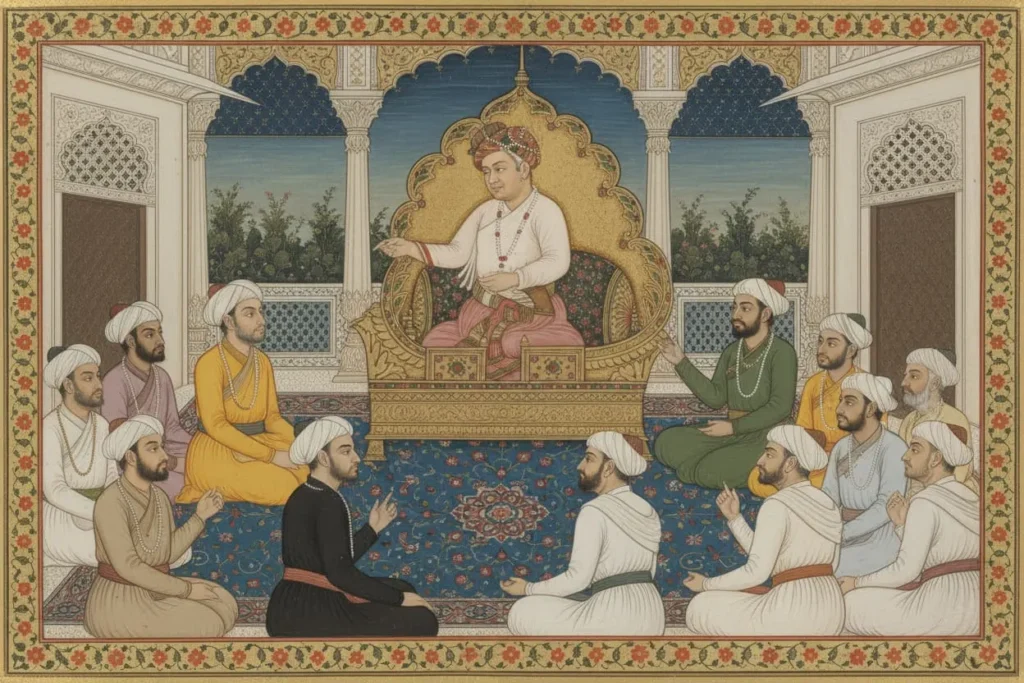
In 1575, Akbar took his experiment in pluralism to its most intellectually ambitious expression. In his eagerness to learn about different religions, Akbar built the Ibadat Khana, a hall of prayer, at Fatehpur Sikri in 1575. At this place, he invited selected mystics, intellectuals, and theologians and held discussions on religious and spiritual themes. He invited scholars belonging to various religions such as Hinduism, Islam, Zoroastrianism, Christianity, and even atheists.
Akbar’s establishment of the Ibadat Khana in Fatehpur Sikri, where scholars and religious leaders from different backgrounds were invited to debate and discuss, exemplifies his desire to foster an atmosphere of intellectual exchange and religious harmony. The debates were fierce, wide-ranging, and genuine, not performances of tolerance but actual confrontations of doctrine and belief, mediated by an emperor who was determined to understand each faith on its own terms.
His belief in religious tolerance is further demonstrated in a letter Akbar sent to King Philip II of Spain, where he claims to have interacted with “educated men of all religions” rather than relying solely on Muslim experts for his education. This letter, written to the most powerful Catholic monarch in the world, who was simultaneously conducting the Spanish Inquisition, is one of the most remarkable documents of sixteenth-century political philosophy.
Din-i Ilahi: The Religion That Tried to Unite All Faiths
The culmination of Akbar’s religious experimentation was the founding of Din-i Ilahi, the Religion of God, in 1582. Akbar introduced Din-i Ilahi, meaning the Religion of God, in 1582 to unite his empire under one religion by bringing together the good things from all other religions. It emphasized tolerance, Sulh-i Kul, brotherhood, love for God, and admiration of his creatures.
The Din-i Ilahi was essentially an ethical system, prohibiting such sins as lust, sensuality, slander, and pride and enjoining the virtues of piety, prudence, abstinence, and kindness. The soul was encouraged to purify itself through yearning for God, a tenet of Sufism, celibacy was condoned as in Catholicism, and the slaughter of animals was forbidden as in Jainism. In its ritual, it borrowed heavily from Zoroastrianism, making light an object of divine worship, and recited the Sanskrit names of the Sun as in Hinduism. There were no sacred scriptures or priestly hierarchy in the Din-i Ilahi.
Crucially, Akbar made no attempt to use the authority of the state to spread his religion. Membership was entirely voluntary and the Din-i Ilahi never numbered more than a handful of adherents. It was less a mass religious movement than a philosophical statement, an assertion that the divine truths underlying all faiths were ultimately one and the same.
Administrative Genius: The Mansabdari System
Akbar’s tolerance was supported by one of the most sophisticated administrative systems of the medieval world. One of the hallmark features of Akbar’s administration was the introduction of the Mansabdari system, a unique method of military and civil administration. This system classified government officials and military commanders into ranks called mansabs, and each rank was responsible for maintaining a certain number of cavalrymen. The system facilitated efficient governance and military organization, ensuring loyalty and service to the emperor.
Under Akbar, Mughal India developed a strong and stable economy which tripled in size and wealth, leading to commercial expansion and greater patronage of an Indo-Persian culture. Akbar’s courts at Delhi, Agra, and Fatehpur Sikri attracted holy men of many faiths, poets, architects, and artisans, and became known as centers of the arts, letters, and learning. The fusion of Persian, Timurid, and Indian artistic traditions under Akbar’s patronage produced what is now recognized as the classical phase of Mughal art and architecture, a visual language of synthesis that perfectly mirrored his political philosophy.
Social Reforms: Beyond Religious Tolerance
Akbar’s reforming impulse extended beyond religion into the social fabric of his empire. His religious policies also brought some social reforms as he condemned the practice of Sati and prohibited infanticide. He restricted child marriage, sought to regulate the slave trade, and permitted widows to remarry, all deeply controversial positions in the social context of sixteenth-century India.
His relationship with Jainism was particularly remarkable. The arguments of Jains against eating meat persuaded him to become a vegetarian. Akbar also issued many imperial orders that were favorable to Jain interests, such as banning animal slaughter. In 1584, 1592, and 1598, Akbar declared “Amari Ghosana,” which prohibited animal slaughter during Paryushan and Mahavira Janma Kalyanak. He removed the jizya tax from Jain pilgrimage places like Palitana. A Muslim emperor becoming vegetarian under Jain influence and protecting Jain holy sites is a detail that speaks volumes about the genuine depth of his pluralism.
Legacy: What Akbar Built and What Was Lost
Akbar died on October 25, 1605, after a reign of nearly fifty years. At the time of Akbar’s death in 1605, there were no signs of discontent among his Muslim subjects, and even theologians like Abdu’l Haq accepted that close ties remained. He had governed one of the most diverse and populous empires on earth with a degree of religious inclusivity that had no parallel anywhere in the sixteenth-century world,not in Europe, not in the Ottoman Empire, not in Safavid Persia.
The historical significance of Akbar’s religious tolerance extends beyond the boundaries of his empire, providing a beacon for future generations on the importance of inclusivity and respect for all beliefs. His policies laid the groundwork for a multicultural society that thrived under Mughal rule, influencing the development of modern secular states.
Yet his legacy proved fragile. His son Jahangir walked back several of his father’s most inclusive policies. His great-grandson Aurangzeb reversed them almost entirely, reimposing the jizya, demolishing Hindu temples, and returning the empire to orthodox Islamic governance. The tolerant empire Akbar built lasted precisely as long as rulers with the vision and the will to sustain it held power. It was an achievement of extraordinary individuals, not of durable institutions, and that is perhaps the most instructive lesson his story offers.
Conclusion: The Emperor the Modern World Still Needs
Akbar the Great remains one of history’s most genuinely instructive rulers, not because his empire was perfect, but because his governing philosophy addressed the fundamental challenge that every multi-ethnic, multi-religious society faces: how to build unity without demanding uniformity. His answer, Sulh-i Kul, universal peace, was not naive idealism. It was hard-headed political philosophy, backed by military power, administrative sophistication, and a genuine intellectual curiosity that refused to accept that any single tradition had a monopoly on truth.
In a world still defined by religious conflict, ethnic nationalism, and the politics of division, the emperor who sat in the Ibadat Khana and listened to Hindus, Muslims, Christians, Zoroastrians, Jains, and atheists debate the nature of God still has something urgent to say.