
Introduction: Beyond the Stereotype of Barbarism
When the name Genghis Khan is spoken, the immediate associations are almost universally dark, massacre, conquest, rivers of blood, cities reduced to ash. This image is not entirely wrong. The Mongol Empire was responsible for some of the most devastating destruction in human history. But it is profoundly incomplete. Egregious misunderstandings of the Mongol Empire have led to some fundamental problems in the study of medieval Eurasia that have obstructed progress. Much is made of the atrocities, massacres, and destruction of the Mongols’ military campaigns, held up in contrast to the scale, effectiveness, and adaptability of the Mongols’ state infrastructure.
The Mongols were simultaneously the greatest destroyers and the greatest connectors of the medieval world. Understanding them fully, without flinching from either truth, is one of the most important and illuminating exercises in the study of power, civilization, and the forces that shape history.
Origins: From Outcast to Universal Ruler
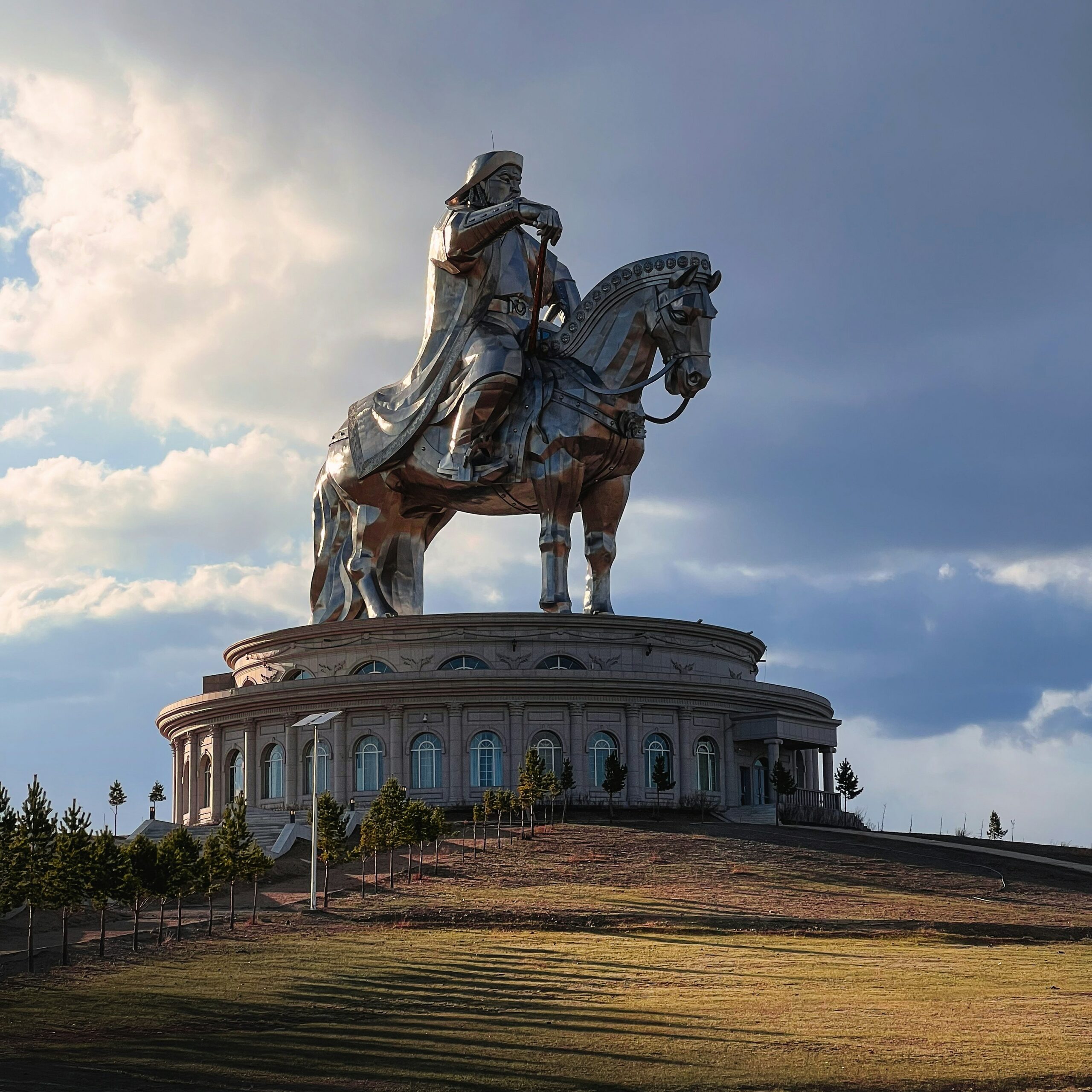
The story of the Mongol Empire begins not with armies but with a child left to survive alone on the steppes. Genghis Khan was actually born Temüjin, around 1162 near Lake Baikal, around what is now the border between Mongolia and Siberia. His father was a member of the royal Borjigin clan, but was killed in a local blood feud when Temujin was young, leaving him to grow up as an outcast.
From those desperate beginnings, Temüjin built one of the most remarkable political and military organizations in history. In 1206, Temüjin was crowned emperor of the Great Mongol State and assumed the title Genghis Khan, something like “the universal leader.” Genghis restructured the army into highly organized units and created laws that forbade the sale of women, theft, and hunting animals during the breeding season, exempted the poor from taxation, and encouraged literacy and trade. The Mongol Empire was born.
The early Mongol army was organized on a decimal system, units of 10, 100, 1,000, and 10,000, cutting across traditional tribal lines to create loyalty to the empire rather than to clan. It was a revolutionary reorganization that transformed a fragmented collection of nomadic tribes into a unified military machine of extraordinary discipline and coordination.
The Scale of Conquest: Numbers That Stagger the Imagination
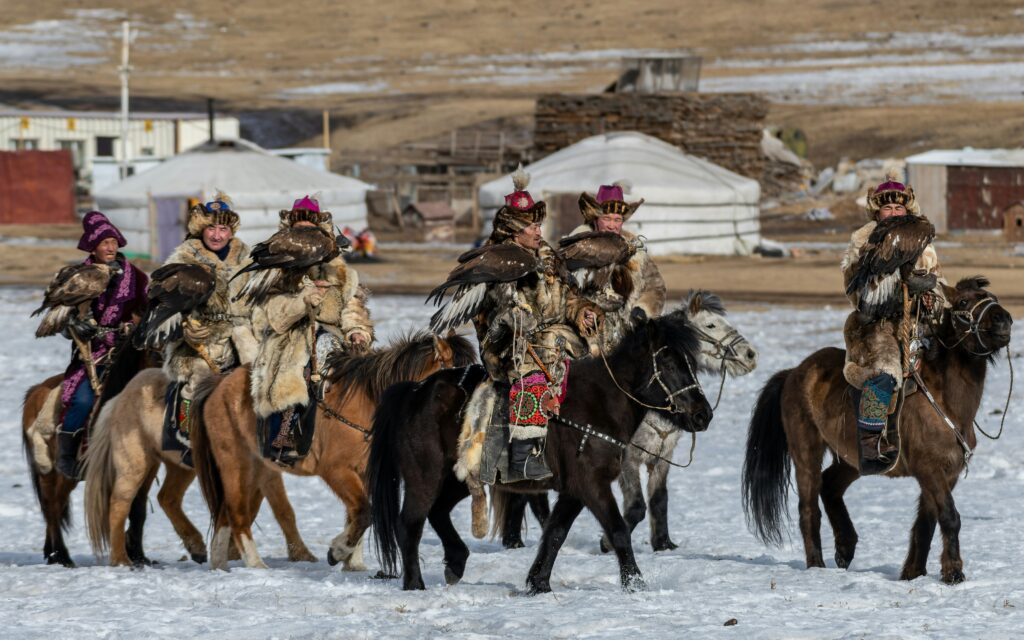
The Mongol Empire at its height was the largest contiguous land empire in human history, a fact that bears repeating because its scale is genuinely difficult to comprehend. The Mongol Empire dominated Asia from the Black Sea to the Korean peninsula. Expert horsemen and archers, the Mongols proved unstoppable in Central Asia and beyond, defeating armies in Iran, Russia, Eastern Europe, China, and many other places.
The vast transcontinental empire connected the East with the West, and the Pacific to the Mediterranean, in an enforced Pax Mongolica, allowing the exchange of trade, technologies, commodities, and ideologies across Eurasia. At its peak, the empire covered approximately 24 million square kilometers, roughly 16 percent of the earth’s total land area, and governed a population of over 100 million people across dozens of different cultures, languages, and religions.
The speed of this expansion was equally astonishing. The rise of the Mongols was preceded by 15 years of wet and warm weather conditions from 1211 to 1225 that allowed favorable conditions for the breeding of horses, which greatly assisted their expansion. Within a single generation, the Mongols had subjugated empires that had stood for centuries.
The Destruction: What the Conquests Actually Cost
The human cost of Mongol conquest was catastrophic by any measure. The Mongol conquests resulted in widespread and well-documented death and destruction throughout Eurasia, as the Mongol army invaded hundreds of cities and killed millions of people. The Mongol Empire, which remains the largest contiguous polity to ever have existed, is regarded as having perpetrated some of the deadliest acts of mass killing in human history. More recently, the Mongol Empire’s conquests have been classified as genocidal.
The death toll estimates are staggering. The death toll for the Mongol conquests is commonly cited as 40 to 60 million, a claim originating from the 1978 book “Atlas of World Population History” by Colin McEvedy and Richard Jones. To put this in context, world population at the time was estimated at around 400 million, meaning the Mongols may have killed between 10 and 15 percent of all human beings alive at the time.
Cities had been destroyed down to their foundations, civilians were massacred, and even irrigation systems were wrecked. The Asian world had been turned upside down in less than two decades. The destruction of irrigation infrastructure in Central Asia, particularly in the Khwarazmian Empire covering modern-day Iran, Uzbekistan, and Turkmenistan, was arguably the most consequential long-term damage. Agricultural systems that had sustained civilization for thousands of years were destroyed in weeks and never fully recovered. Regions that were once among the most prosperous in the world became desert wastelands that remain sparsely populated to this day.
The Mongols also introduced a new dimension to warfare. The Mongols practiced biological warfare by catapulting diseased cadavers into the cities they besieged. It is believed that fleas remaining on the bodies of the cadavers may have acted as vectors to spread the Black Death. Other historians, like William McNeill and David Morgan, argue that the Black Death, partially spread by the Mongols, was the main factor behind the demographic decline of that period. The plague also spread into areas of Western Europe and Africa that the Mongols never reached.
The Sack of Baghdad in 1258 stands as perhaps the single most culturally devastating act of Mongol conquest. Hulagu Khan’s forces destroyed the Abbasid Caliphate, the political and intellectual center of the Islamic world, killing the Caliph Al-Musta’sim and reportedly throwing the contents of the House of Wisdom into the Tigris River, turning its waters black with ink. Centuries of accumulated scientific, philosophical, and literary knowledge were lost in days.
The Other Side: Trade, Tolerance, and the Pax Mongolica
Here is where the Mongol story becomes genuinely complex, and where the stereotype of pure barbarism breaks down entirely. Once conquest was complete, the Mongols proved to be remarkably effective administrators who actively promoted trade, religious tolerance, and cross-cultural exchange.
The Mongol Empire inextricably linked Europe and Asia and ushered in an era of frequent and extended contacts between East and West. Once the Mongols had achieved relative stability and order in their newly acquired domains, they neither discouraged nor impeded relations with foreigners. The Mongols expedited and encouraged travel in the sizable section of Asia that was under their rule, permitting European merchants, craftsmen, and envoys to journey as far as China for the first time.
In China, the Mongols increased the amount of paper money in circulation and guaranteed the value of that paper money in precious metals. They also built many roads. Under Mongol rule, merchants had a higher status than they had in traditional China. In Persia, the Mongols granted higher tax breaks and benefits to traders in an effort to promote commerce.
The Mongols were also strikingly tolerant in matters of religion, a remarkable quality in an era defined by religious warfare. Eventually, the Mongols became part of the sedentary societies they had so easily overwhelmed, and many converted from traditional shamanism to Tibetan Buddhism or Islam. Within the empire, Christians, Muslims, Buddhists, Taoists, and shamanists all practiced their faiths freely. The Mongol court in Karakorum was famously described by European travelers as a place where representatives of every major world religion debated theology in the presence of the Khan.
Genghis Khan’s Legal Revolution
Beyond conquest, Genghis Khan created something that is rarely discussed in popular accounts: a sophisticated legal code. The Yasa, the great law of the Mongols, governed everything from military conduct to trade to the treatment of prisoners. It prohibited the killing of diplomatic envoys, guaranteed freedom of religion, and established a postal relay system called the yam that connected the empire from the Pacific to Eastern Europe.
The Cambridge History of the Mongol Empire stresses the role of the Mongols’ nomadic culture and its main features mobility and redistribution and their active role in promoting cross-cultural, economic, and religious exchanges, as well as the geopolitical, ethnic, and institutional transformation the empire instigated in China, Iran, Russia, and Central Asia.
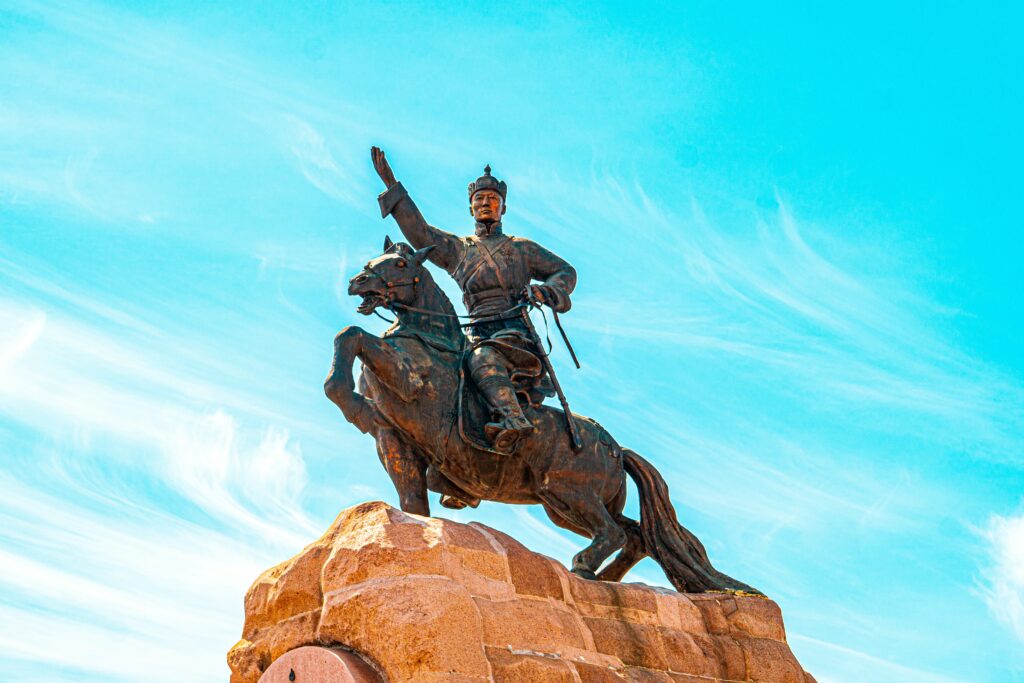
The yam postal system, with relay stations every 25 to 40 kilometers across the entire empire, was arguably the most sophisticated communication infrastructure the world had seen. It allowed messages and goods to travel from one end of the empire to the other in weeks rather than months, making possible a degree of administrative coordination that no previous land empire had achieved.
The Fall: Why the Greatest Empire Collapsed
The Mongol Empire’s disintegration was as dramatic as its rise. The empire began to split due to wars over succession, as the grandchildren of Genghis Khan disputed whether the royal line should follow from his son and initial heir Ögedei, or from one of his other sons. The conflict over whether the empire would adopt a sedentary, cosmopolitan lifestyle, or continue its nomadic, steppe-based way of life was a major factor in the breakup.
All three western khanates would constantly fight each other in border disputes. Each would eventually adopt Islam as their state religion, itself yet another bone of contention between elites. Even Yuan China succumbed to the all-too-familiar civil wars from rival groups, and with a weak economy beset by famines and localized rebellions, the Ming Dynasty was able to take over China in 1368.
The very qualities that made the Mongols unstoppable in conquest, their nomadic mobility, their rejection of fixed administrative structures, their reliance on personal loyalty to the Khan, made sustained governance of a sedentary agricultural empire extraordinarily difficult. The empire that had taken three generations to build dissolved within two.
Legacy: What the Mongols Left Behind
The Mongol legacy is written across the modern world in ways both visible and invisible. The Cambridge History of the Mongol Empire concludes with the Mongol contribution to the Age of Exploration, the transition from the medieval to the early modern world, and the eventual decline of nomadic political power. The reconnection of the Silk Road under Mongol rule created the conditions for the exchange of knowledge, goods, and disease that defined the transition from the medieval to the modern era. Marco Polo’s famous journey to China was made possible by the Pax Mongolica. The European demand for Asian goods stimulated by that reconnection eventually inspired the Age of Exploration.
Asian goods reached Europe along the caravan trails earlier known as the Silk Roads, and the ensuing European demand for these products eventually inspired the search for new sea routes to Asia. In this sense, the Mongol Empire, the great destroyer of medieval civilization, also inadvertently set in motion the forces that created the modern world.
Conclusion: Holding Two Truths at Once
The Mongol Empire demands that we hold two truths simultaneously, truths that are both real, both documented, and both essential to understanding one of history’s most consequential forces. The Mongols killed tens of millions of people, destroyed irreplaceable centers of knowledge and civilization, and reshaped the demographic map of Eurasia in ways that still echo today. They also connected the world, promoted trade and religious tolerance at a scale no previous empire had matched, and created the conditions for the cultural and commercial exchanges that led directly to the modern era.
To see only the destruction is to misunderstand the Mongols. To see only the Pax Mongolica is to excuse the catastrophe. The full truth, difficult, contradictory, and historically honest, is that the Mongol Empire was both the greatest catastrophe and one of the most transformative civilizational forces in human history. That contradiction is not a flaw in our understanding. It is the point.