
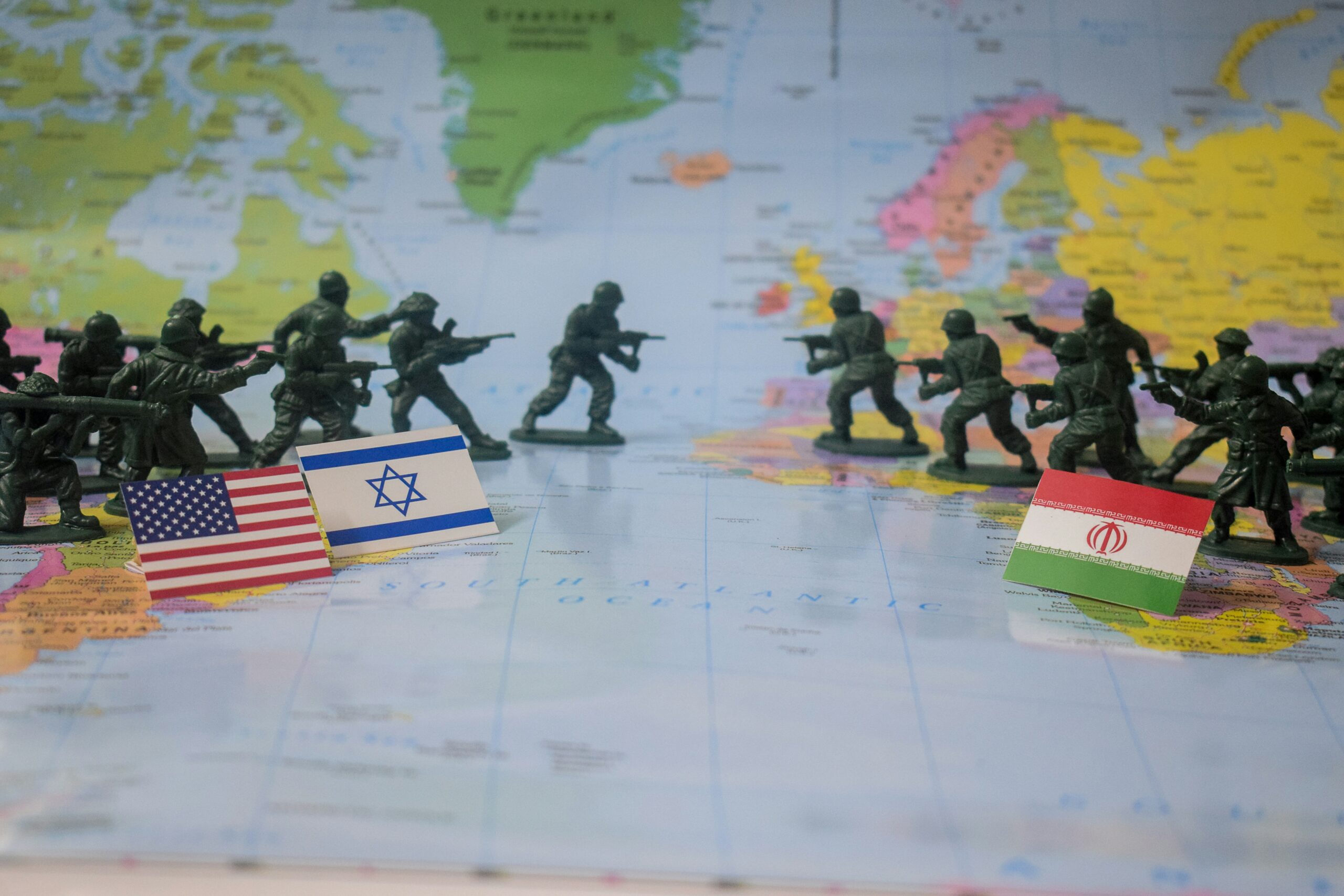

Ignition of the 2026 Iran-Israel War
Iran and Israel engaged in a war that possibly escalated on February 28, 2026, when US and Israel launched missile backed co-ordinated attacks on Iran’s major cities targeting top military leaderships and Nuclear facilities. They targeted more than 24 provinces across the country, not only the military targets but the civillian infrastructure as well. The strikes also killed major military and leaders. Supreme Leader of Iran Ayatollah Syed Ali Khamenei was assasinated along with Defence Minister Amir Nasirzadeh, Chief of Staff of Iranian Armed Forces, Mohammad Bagheri, Adviser to Supreme Leader, Ali Shamkhani, and IRGC Intelligence Commanders: Javad Pourhossein (foreign intelligence), Mohammad-Reza Bajestani (security), Ali Kheirandish (counterterrorism), Saeed Ehya Hamidi (Israel war adviser).
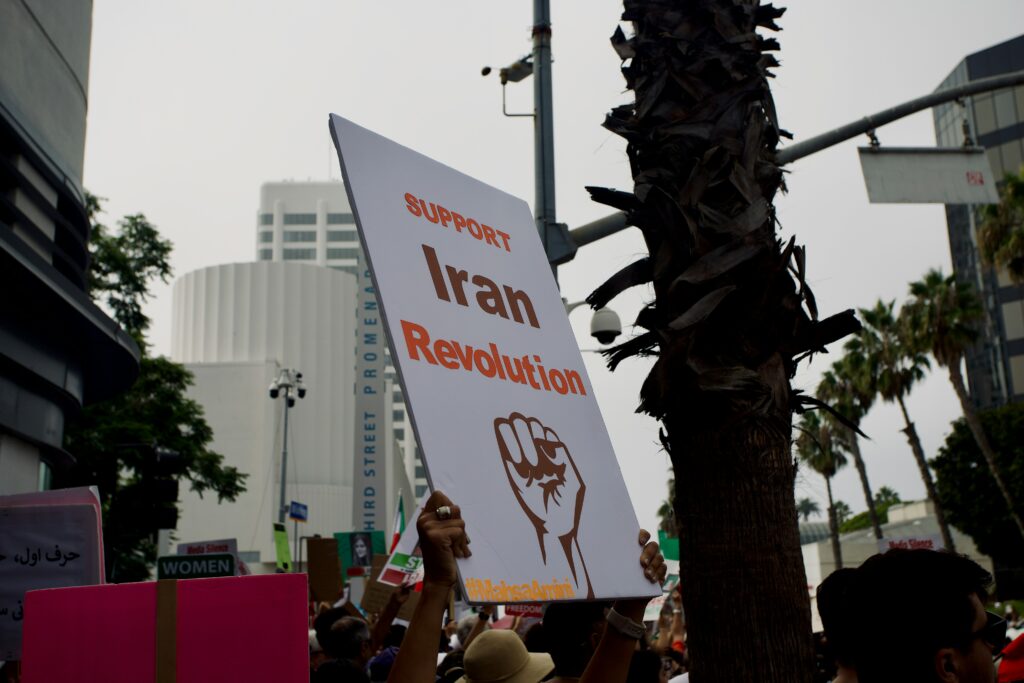
These strikes not only killed these leaders but the civillians as well. As of now, a month has passed since these attacks and hundreds of innocent Iranian civillians have been killed by US-Israel attacks. The major one is the Girls school attack in Southern Minab killing over 165 girls and staff members in the attack as reported by Aljazeera. This depicts the intentions of Israel backed by US. Killing civillians, targeting infrastructure including steel factories and water plants, precised attacks on schools and universities, and residential buildings across the region.
In retaliation, Iran has launched a barrage of missiles against Israel and US bases across the region in Gulf Countries. Iran in its defence says, we did not start this war, but US did by killing our Supreme Leader. The war which was supposed to be ending in 3 or 4 days according to the US President has now entered in its second month. It has caused severe effects on several countries, not only on Israel or US. The countries like Pakistan, India, Kuwait, UAE, Saudia Arabia, Oman, Qatar, Japan are severly affected. This has now lead to a major conflict, not only a regional war.
Let us now compare some key aspects of two major powers of the region in miltary power, defense capabilities, Ground troops power, GDP, Global influence and many more.
01. GDP and income per Capita
Israel’s economy outperforms Iran in terms of GDP as Israel’s GDP leans at $540 billion while Iran stands at $437 billion (2024 Figures). As of this fact, Israel contributes about 0.51% while Iran gives 0.41% of the global economy share. As far as GDP per capita is concerned, the gap is way much bigger than you think. Israelis earn about $52,000 annually while Iranians on the other hand earn only $5,800. Amid war hits in 2026, Israel stands at $559 billion and Iran at $448 billion. (Reuters)
| Metric | Iran | Israel |
|---|---|---|
| Total GDP (USD billion) | 436.91 | 540.38 |
| % of World Economy | 0.41% | 0.51% |
| GDP per Capita (USD) | ~5,779 | ~52,000+ |
| 2026 Projection (USD bn) | ~448 | ~559 |
02. Population
Iran has a massive population of 93 Million in 2026. It gives Tehran a massive advantage in ongoing conflict and outplaces Israel in terms of manpower. It is the 17th most populated country in the world. (worldpopulationreview,)
Israel has only a small population of 10.2 Million, giving a huge ratio of 9:1. As of these stats, Iran can build huge proxy forces with their immense population and also a huge amount of reserves as well. (countrymeters.info)
03. Military Strength
Iran holds a clear numerical edge in terms of total manpower. The country has 610,000 active fighting men with 350,000 in the regular army and 190,000 in the IRGC. They also have 350,000 reserves as well.
Israel have a huge number as well but not bigger than Iran. They have highly trained troops of ative personnel termed as IDF and 465,000 reserves. (globalfirepower)
04. Air Force Superiority
Israel maintains a way better, advanced, precise and well trained air force loaded with latest tech and aircrafts. Air Force of Israel is operating with 612 total aircraft including 241 modern fighter jets like F-15s, F-16s, and 39 F-35I stealth fighters, plus 48 AH-64 Apache attack helicopters and refueling tankers for extended strikes.
In-comparison of Israel’s 612, Iran’s air force lags with 551 aircraft, of which only 186-188 are combat fighters, mostly aging pre-1979 US models (F-4, F-5, F-14) and Soviet-era MiG-29s/Su-24s hampered by sanctions, spare parts shortages, and limited pilot training. Keeping in mind all these details and figures, Israel has clean air superiority over Iran in Air Combats. (simpleflying)
05. Naval Force
Iran possesses a larger and more asymmetric navy suited to Persian Gulf chokepoints like the Strait of Hormuz, operating around 91-109 vessels including 19-25 submarines (mostly midget/tactical types), 7 frigates, 3-7 corvettes, 21+ patrol boats, and 24 amphibious ships for swarm tactics and mine warfare.
Israel fields a smaller but technologically superior fleet of 53-82 vessels, emphasizing 6-9 advanced Dolphin-class submarines (nuclear-capable), 7-15 modern Sa’ar corvettes with advanced missiles/radars, 28-49 patrol boats, and no frigates, focused on Mediterranean/Red Sea coastal defense and precision strikes.
Iran does have a numerical edge over Israel which helps in proxy operations in Hormuz, but Israel’s qualitity and US Backed naval system helps them in open water battles and also gives them an upperhand due to tech. (globalmilitary)
05. Defense Budget
Israel’s defence budget is also much bigger than Iran. As of 2024, budget allocated for defense was $46.5 billion. It rose 64% from previous budget due to their recent atacks and conflicts with Middle East and Palestine. The defense budget is 8-9% of the total GDP and $3.4 billion of annual US military aid as well.
Iran spends around 3% of their GDP on their defence which is roughly $7.9-10. Iran mostly spends on missiles and drones while Israel spends in advanced tech like F-35s and Iron Dome upgrades, which sustains their airsuperiority. (Dawn, “Defence Spending” section)
06. Missile Capabilities
Iran has the largest missile arsenal in the Middle East, and not only the largest, but diverse missile arsenal. They have gigantic arsenal of 3,000 ballistic missiles, thousands of short range systems. Iranian Military also comprises medium ranged missiles like Shahab-3 (1,300 km), Sejjil (2,000-2,500 km), Emad (1,700 km), Khorramshahr (2,000 km), and hypersonic Fattah variants (1,400 km, Mach 13). They have fired 500 Ballistic missiles and numerous medium ranged missiles on various US bases and Israel military targets. (iranwatch)
Israel maintains a smaller, precision-focused stockpile centered on Jericho series, Jericho-2 (1,500 km IRBM), Jericho-3 (4,800-6,500 km ICBM), plus LORA (280 km). Iran’s volume give them a license to fie at larger rates, but Israel have precision with long range. (Reuters)
07. Nuclear Warheads
Israel is an established nuclear state with an estimated 80-90 operational warheads. Meawhile Iran is not a nuclear state. US and Israel have claimed multiple times over the past that Iran is working to become a nuclear power, Iran on the oher hand has denied all the allegations and citing it an Israeli propaganda to impose sanctions on them.
08. Proxy Forces
Iran has a great network of proxy forces known as “Axis of Resistance”. These forces provide a massive ground strength and fighting orce to Iran. Hezbollah is military ally for Iran helping them in defense against IDF. They operate in Lebanon and have around 40,000-100,000 fighters and 150,000+ rockets. Iraqi PMF totaling 150,000-190,000 (Iran-aligned factions ~50,000-80,000). Houthis in Yemen with around 20,000-30,000 fighters firing missiles and drones on shipping and helping Iran and its proxies in any possible way. Hamas operates in GAZA with 30,000 fighters but now mostly scattered due to IDF continuous attacks on GAZA for the past 2 years. Iran also have some small Syrian/Iraqi groups operating in Syria. (latimes)
While Israel mostly depends on foreign aids from US and some Gulf states as it does not have any proxy group like Hezbollah, Hamas or Houthis.
09. Geography
Iran enjoys a pronounced geographical upper hand through its vast 1.65 million km² “natural fortress” of the Iranian Plateau, ringed by the rugged Zagros and Elburz mountains plus expansive deserts that provide strategic depth for dispersing missiles, nuclear sites, and forces, enabling an anti-access/area-denial (A2/AD) doctrine that complicates air-only invasions by US-Israel coalitions. (asiatimes)
Israel, constrained to just 22,000 km² with narrow coastal plains, vulnerable urban centers, and no shared border with Iran (1,800+ km apart), faces heightened exposure to missile barrages but benefits from compact size for rapid troop mobilization, short supply lines, and defensible terrain like the Golan Heights and Negev approaches. (rosetta)